Green China
3 years, 18 days, 21 hours, 54 minutes

3 July 2026
China is showing that economic growth can be decoupled from growing carbon emissions.
Will China save the world? I mused as I listened on Tuesday to the launch of this year’s Energy Institute’s Statistical Review of World Energy which is a comprehensive analysis of the energy demand and supply (and carbon emissions) of 2025. A year ago I commented on the report for 2024 (It Just Isn't Enough), and the year before that the one for 2023 (A Review of World Energy). In both cases my takeaway was pure despair. But this year, I am glimpsing seeds of hope. And they are nearly all due to what the report says about China.
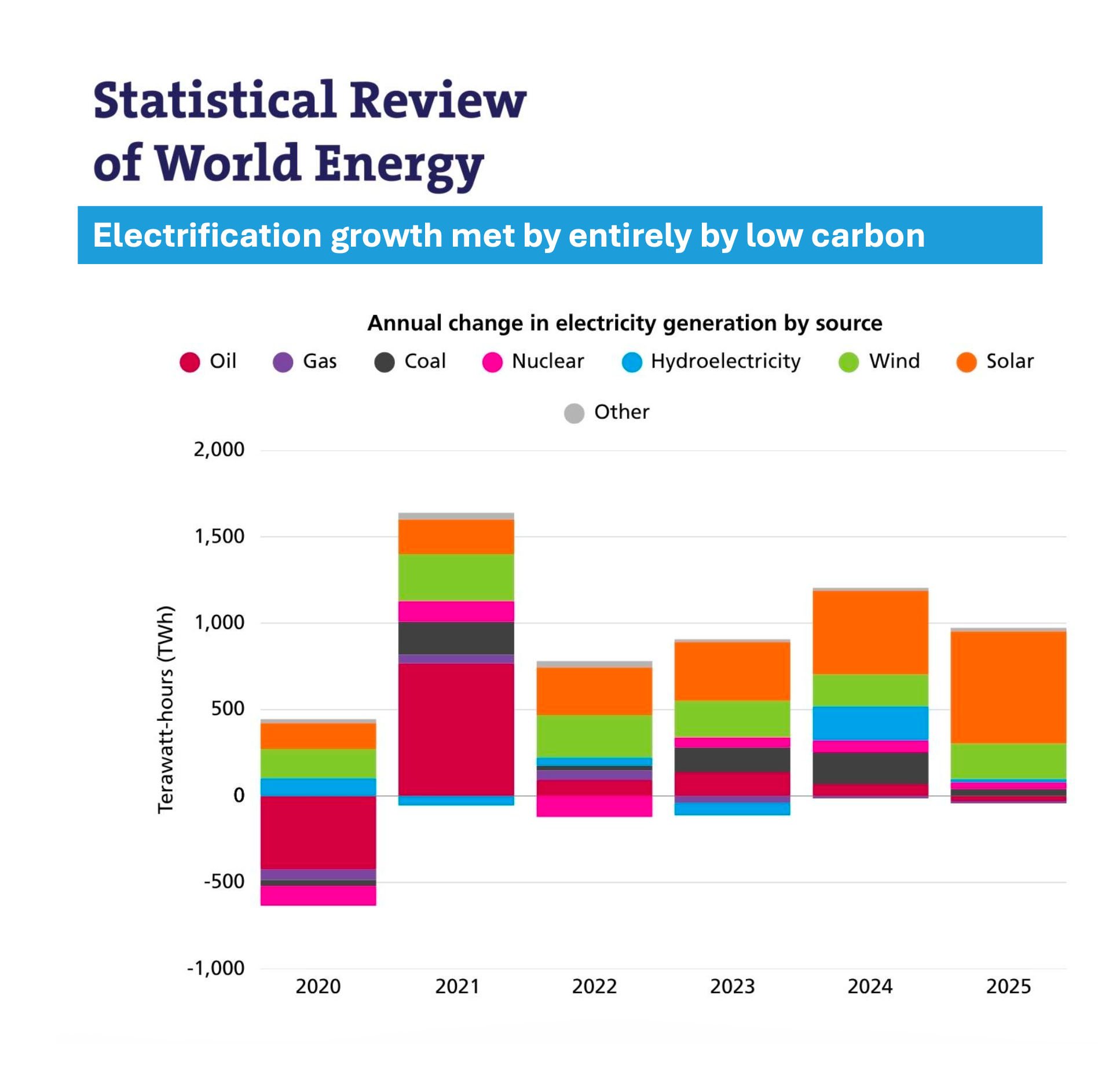
The four graphs below, which I have selected from the report and added my own commentary, illustrate the headlines of the report. Most indicate that still the world is failing to grasp the seriousness and urgency of the climate emergency. Total energy generation increased again, by 1.7%, unsurprisingly given energy demand is largely driven by economic and population growth. Total carbon emissions from fossil fuels increased again, by 1.1%. Fossil fuels continue to account for 86% of the world’s total energy supply and output of all energy sources, including coal, oil and gas, increased.
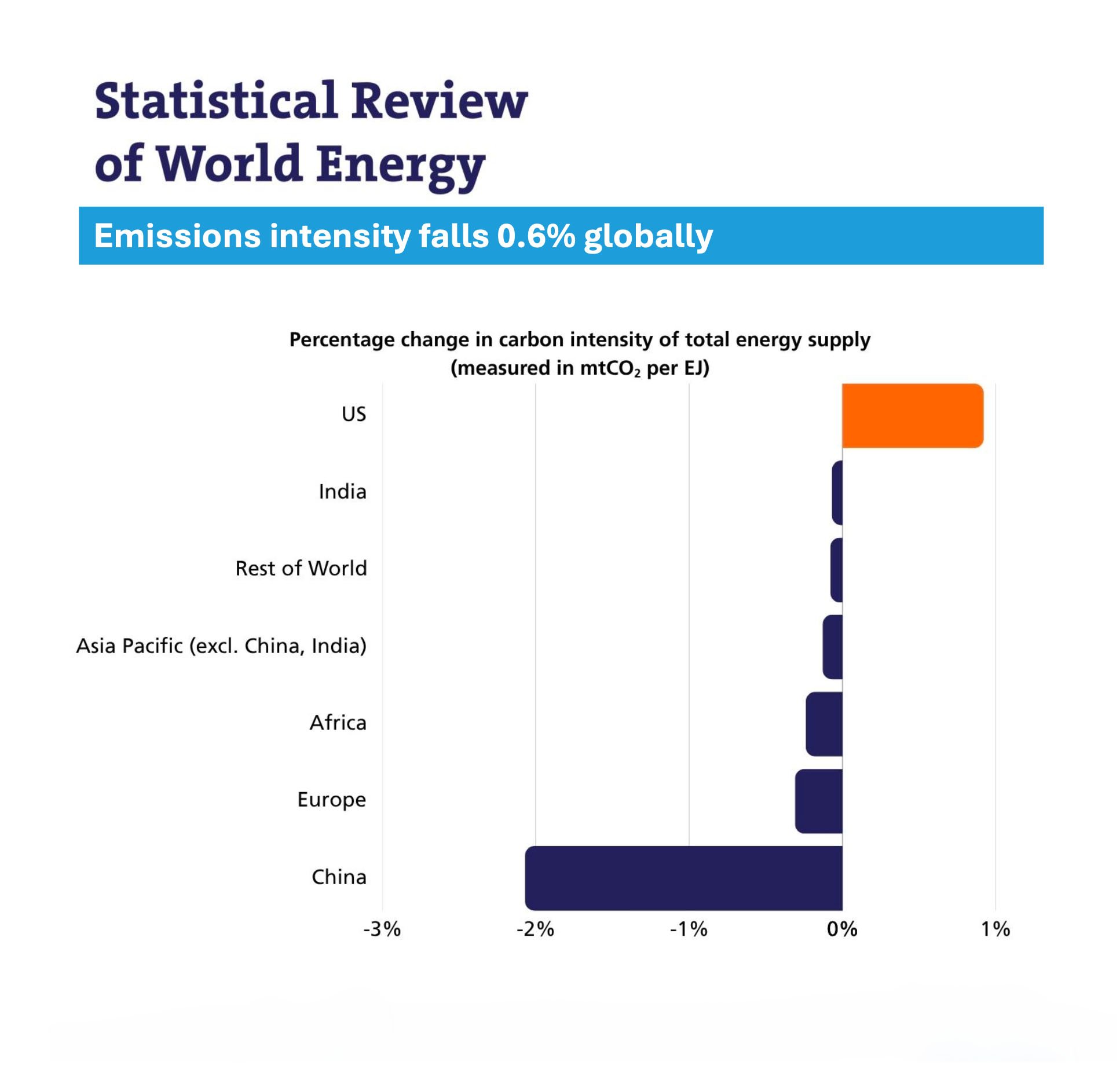
For this miserable performance everyone is to blame but the US deserves special censure. The third graph below shows that it was the only part of the world where carbon emissions per unit of energy use increased, and significantly so. The US was single-handedly responsible for a third of the total global increase in carbon emissions and the vast majority of the increase in the output of coal. May our children forgive them.
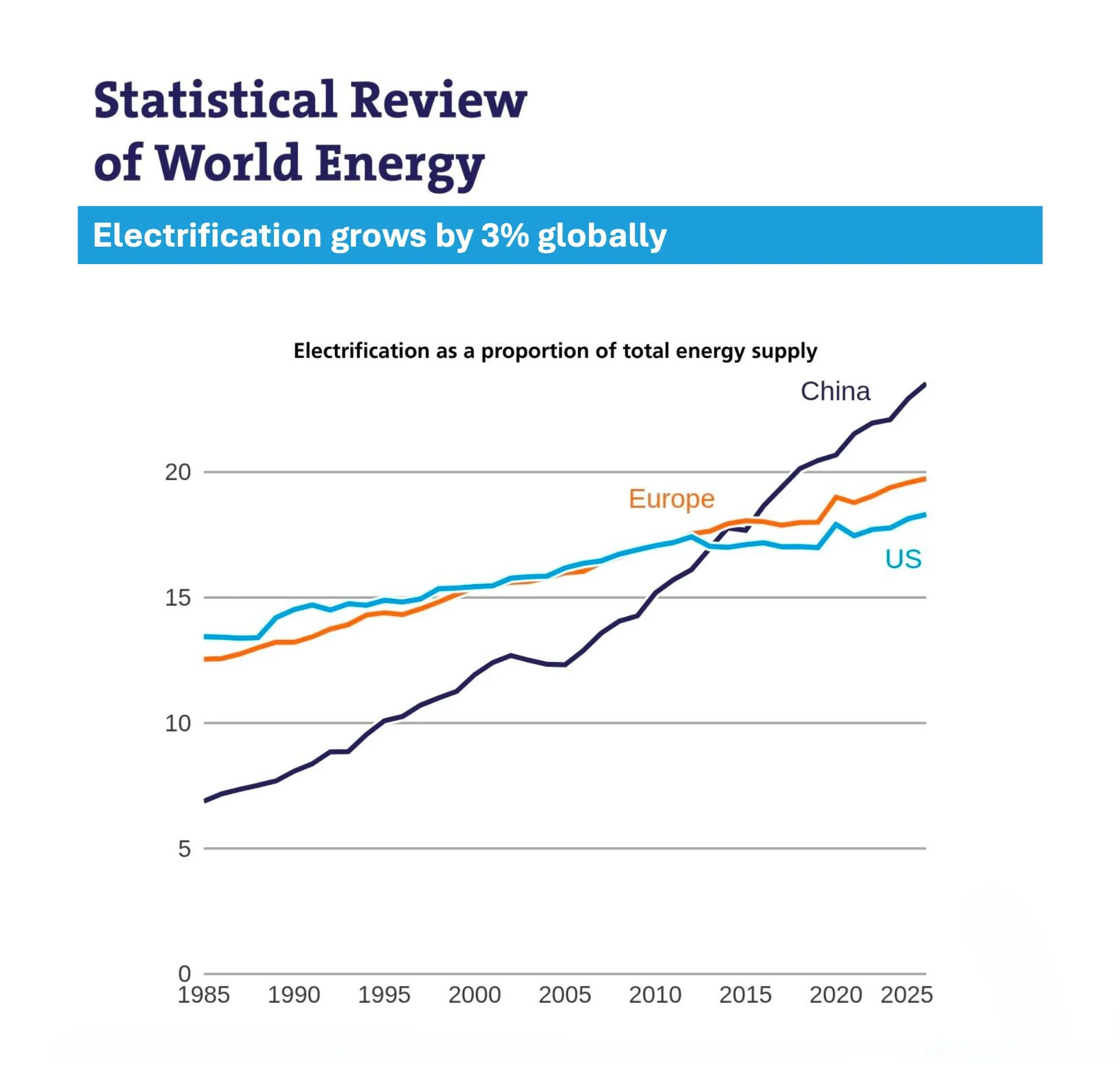
But in contrast China pulled off something approaching a miracle for a still fast growing country. Its coal consumption (though still the highest of any country in the world) remained flat. Its energy intensity fell, to the extent that the US increase in emissions was four times that of China. Its policies continue to drive a much faster shift towards electrification, as shown in the second graph, and as a result Chinese road fuel consumption per capita in 2025 was a third the level in the EU and a sixth of the level in the US. It was also China that drove most of the spectacular increase in battery storage capacity (see fourth graph). This is a country which understands the future is electric and renewable, and is powering towards that (excuse the pun).
It matters because it is a reasonable bet that China will sometime this century become the most powerful country in the world. But it also matters because China is showing that economic growth can be decoupled from growing carbon emissions. India is on a similar course but it is China's renewable revolution that is lighting the way.
Graph 1: Total energy generation increases by 1.7%. Fossil fuels still account for 86% of total energy supply, but growth in renewables, especially solar, meets all growth in electricity demand.
Graph 2. Policies in China drive a much faster shift to electricity in energy use (eg from fossil fuel cars to electric), helping reduce the carbon impact of their growing economy.
Graph 3. Shame on the US, as the only part of the world where energy use becomes more carbon intensive (carbon emitting per measure of energy power consumed). Total global emissions from energy rise 1.1%, fully one-third of which is thanks to the US whose coal output increases by 10%.
Graph 4. Exponential growth in battery storage gives hope for a fully renewable future where fossil fuel baseload energy is no longer required.
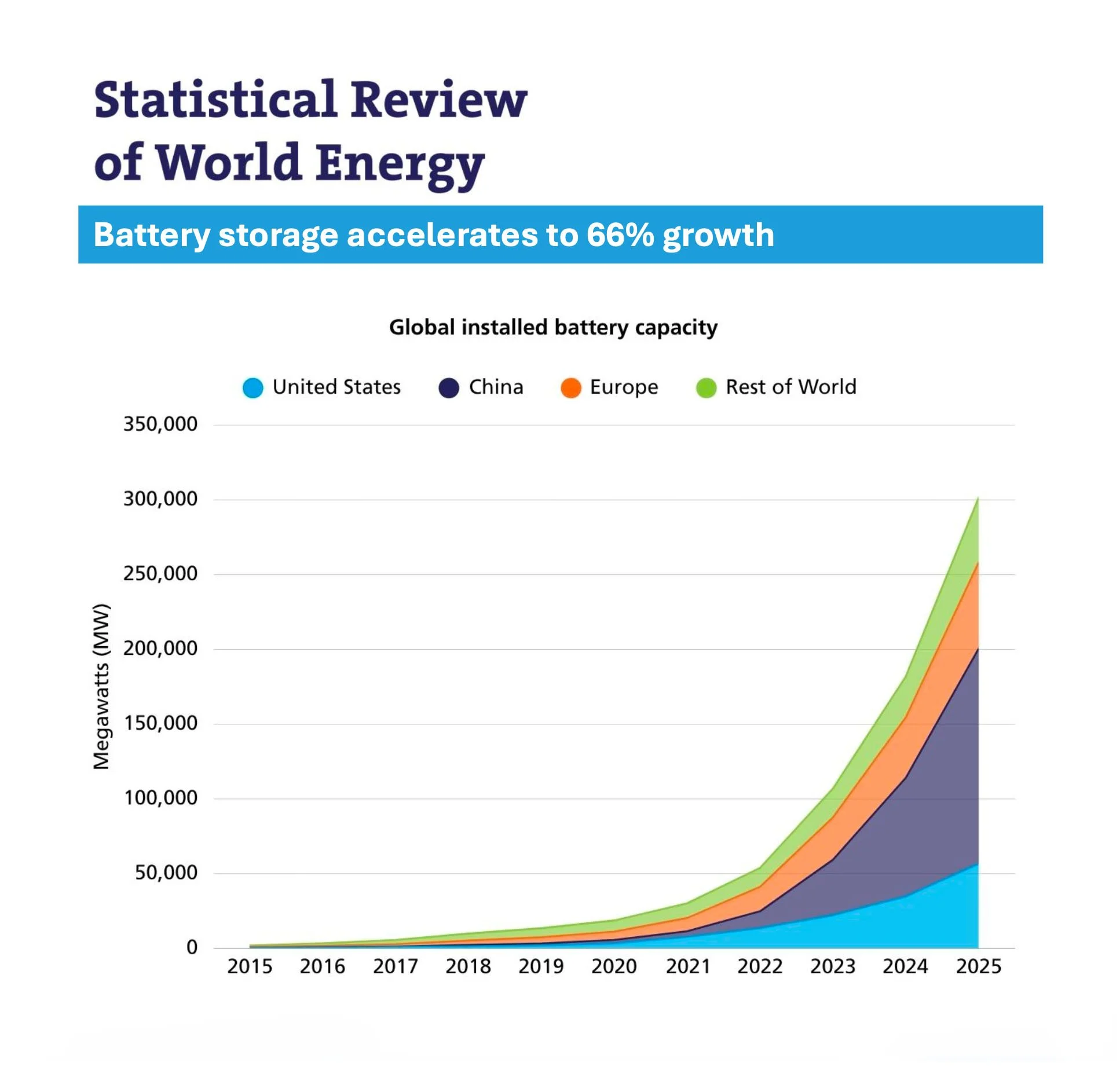
Image credits 1-4: 2026 Energy Institute