Staying Afloat
4 years, 3 months, 10 days, 20 hours
11 April 2025
A story of the climate and geopolitical challenges of our time.
Everyone has heard of the Panama Canal. But how much do you really know about it? And has it occurred to you that besides being an astonishing feat of engineering that allows the world’s biggest ships to shortcut from the Pacific to the Atlantic and vice-versa, it might also be a story that encapsulates the climate and geopolitical challenges of our time?
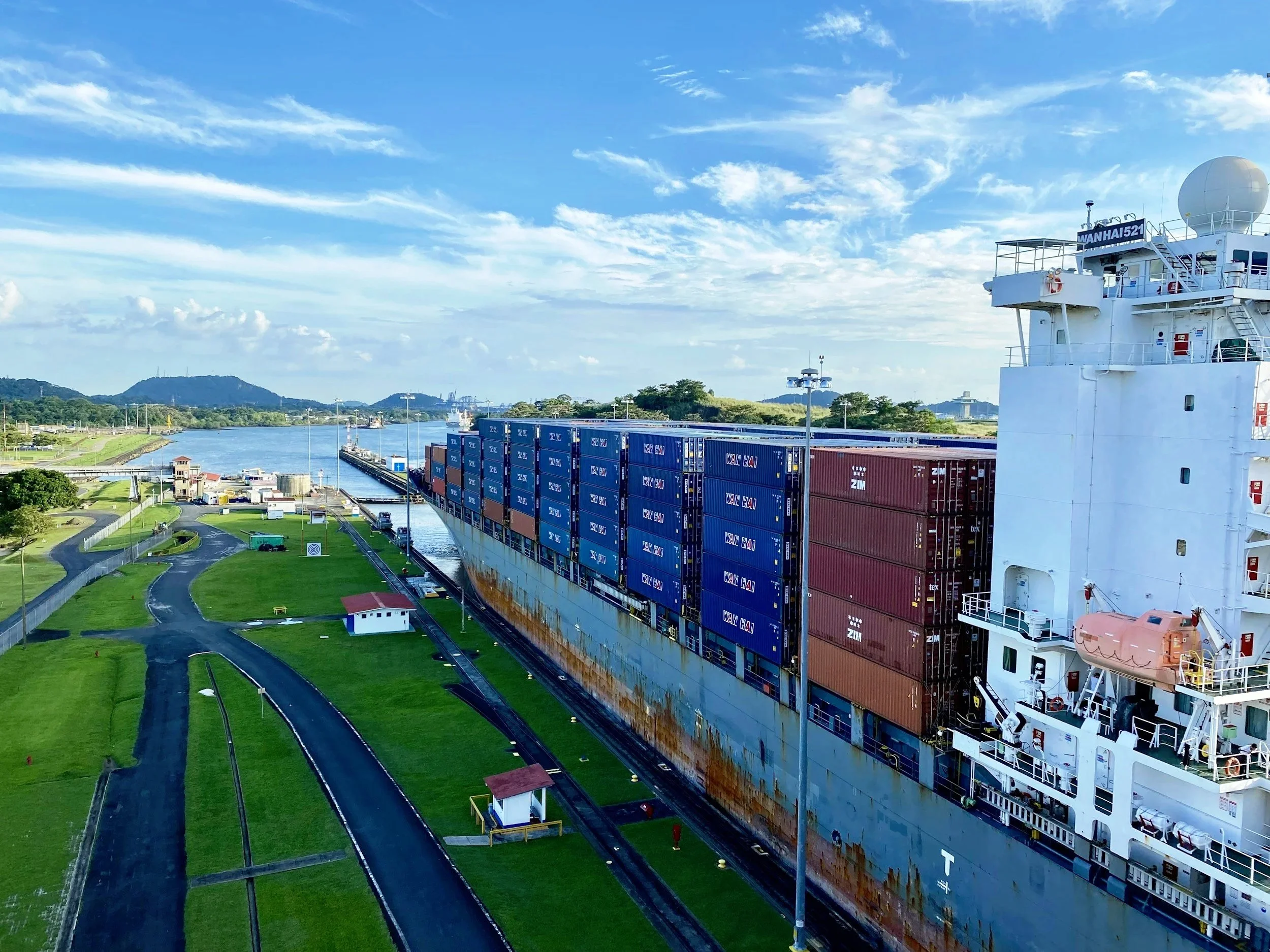
I confess I knew very little before I arrived in Panama two weeks ago and thanks to José Felix Magaña, had the privilege of meeting with the CEO of the Canal Authority. As you read in the press about the ongoing political discussions, the sale by CKI of Panama Ports, and the acquisition by Maersk of the Panama Railway, perhaps the following small snippets of what I have learned may add to your appreciation, as it did to mine:
The history of the canal is the history of US – Panamanian relations. Although first attempted by the Frenchman who built the Suez Canal, when he failed the US stepped in and completed the canal in 1914. To facilitate that it was agreed in a 1903 treaty, to give the US sovereign control over the ‘Canal Zone’ which was not just the canal but extended 5 miles each side. Decades of friction over that agreement eventually resulted in a new treaty, in 1979, giving control to Panama from the end of 1999. So the ownership and control debate is long-running and still raw.
It operates on gigantic amounts of freshwater, not seawater. Every transit uses 200 million litres of freshwater drawn from the artificial lake in the middle of the country, created by a dam to capture water from the country’s central rainforest. The reservoir also serves Panama City. So when, last year, low rainfall depleted the reservoir, the number of transits had to be cut from 52 vessels a day to 36. Hence the proposal now to dam another river, but besides the time that will take, I wonder if it is like King Canute trying to hold back the climate change tide?
Perhaps there are better alternatives? The canal already ‘recycles’ freshwater – perhaps it could do more. Getting ships through the canal is slow and laborious, as I saw for myself, as well as very expensive. What if more containers could be taken by rail, if the railway were expanded. What if a pipeline could carry liquid goods alongside the canal? Of course to do these things would require more port capacity on each side. Is this all starting to make sense now?
But at its heart there is an even more basic story here. It is the story of local needs, versus national, versus global, and human v nature, not necessarily in tension, but potentially and often so.