Our Only Home
3 years, 7 months, 24 days, 21 hours
29 November 2025
Trying to save the world is apparently not that newsworthy.
‘Nuestra Sociedad está enferma’ ('Our society is sick'). ‘Our leaders... do not understand the basic concept that we are on a finite planet’.
So says the Colombian filmmaker and environmentalist, Nicolás Ibargüen, in his recently released interview following the death of one of the most revered champions of nature, Jane Goodall. He argues that humankind has a disease, like a virus, fuelled by belief in our superiority over all other things on earth, that leads us to forget that we are part of and intimately dependent on our natural world. And so we are destroying that on which we depend.
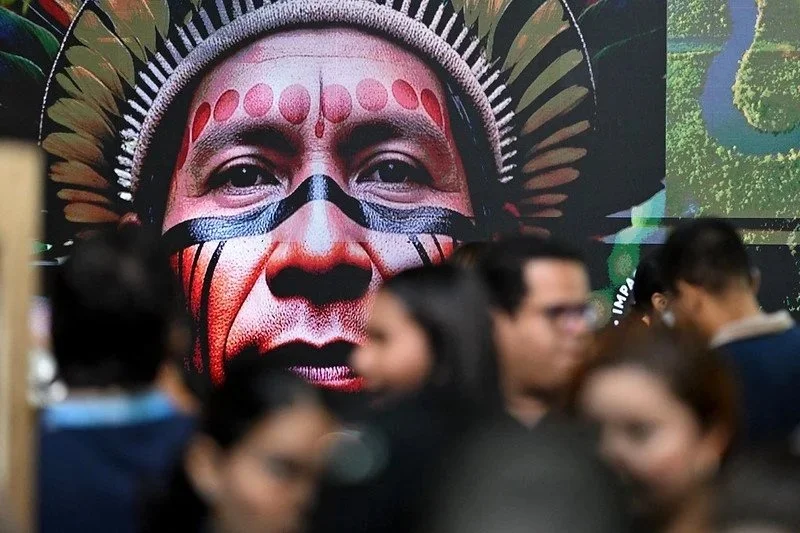
My first reflection on the outcome of COP30, which concluded in Belém, Brazil, last week, was that it confirmed, yet again, what Nicolás says. Collectively, our leaders failed us. The process failed us. The progress was marginal. We continue on our self-destructive path. And perhaps out of indifference, or scepticism that anything meaningful would be achieved, the press coverage was minimal. Wimbledon, the Tour de France and the World Cup get acres of media publicity. Trying to save the world is apparently not that newsworthy.
But dip into the better informed discussions post COP30, and a more positive picture emerges. A very good summary has just been put out by the World Resources Institute: COP30's Outcomes and Disappointments. But my top recommendation is the latest Outrage and Optimism podcast: Inside COP30 The Final Hours and the Road Ahead. Whilst the process of sleep-deprived delegates debating small print has been derided in some of the post-COP commentary, Christiana Figueras celebrates that countries once again put multilateralism above their national interest in agreeing the final text, that there was no retreat from the previous COP positions, despite the stance of the US, that science continues to be respected as the basis of the negotiations, that striving to avoid going over 1.5 degrees is still on the table, however impossible everyone knows it now is, and that Nationally Determined Contributions for reducing carbon emissions are still required to be fulfilled.
In the same podcast Tom Rivett-Carnac goes further in his positivity, with copious examples of how real progress is being made. For example, the cost of decarbonised energy is tumbling, with the cost of solar falling 12% last year, implementation and adoption is gathering pace, in renewables and electric vehicles, the amount of finance being committed, whether for adaptation, nature protection or decarbonisation, is increasingly rapidly. And although outside the official final text, the roadmaps away from fossil fuels (supported by more than 80 countries) and for halting and reversing deforestation (supported by more than 90 countries) will be developed.
In the fractious start to COP30, when the UK surprised Brazil by declining to commit public money into their flagship Tropical Forest Forever Facility, Lord (Zac) Goldsmith, a former Conservative MP and Minister, was quoted saying 'You could cover every single rooftop in Europe with solar panels, but if we lose the Congo or the Amazon or southeast Asia’s forests, we’re stuffed’. Now, reflecting on COP30, I don’t feel it means we are necessarily stuffed, more up an Amazon creek, drifting forward with infuriating leisure, and with only half a paddle.
Image credit: Alex Ferro/COP30 Brasil Amazônia, United Nations Framework Convention on Climate Change (UNFCCC).